Original story at Does This Potato Farmer Grow the Golden State’s Best Spuds?
Article by Hilary Rance. Photography by James Collier.
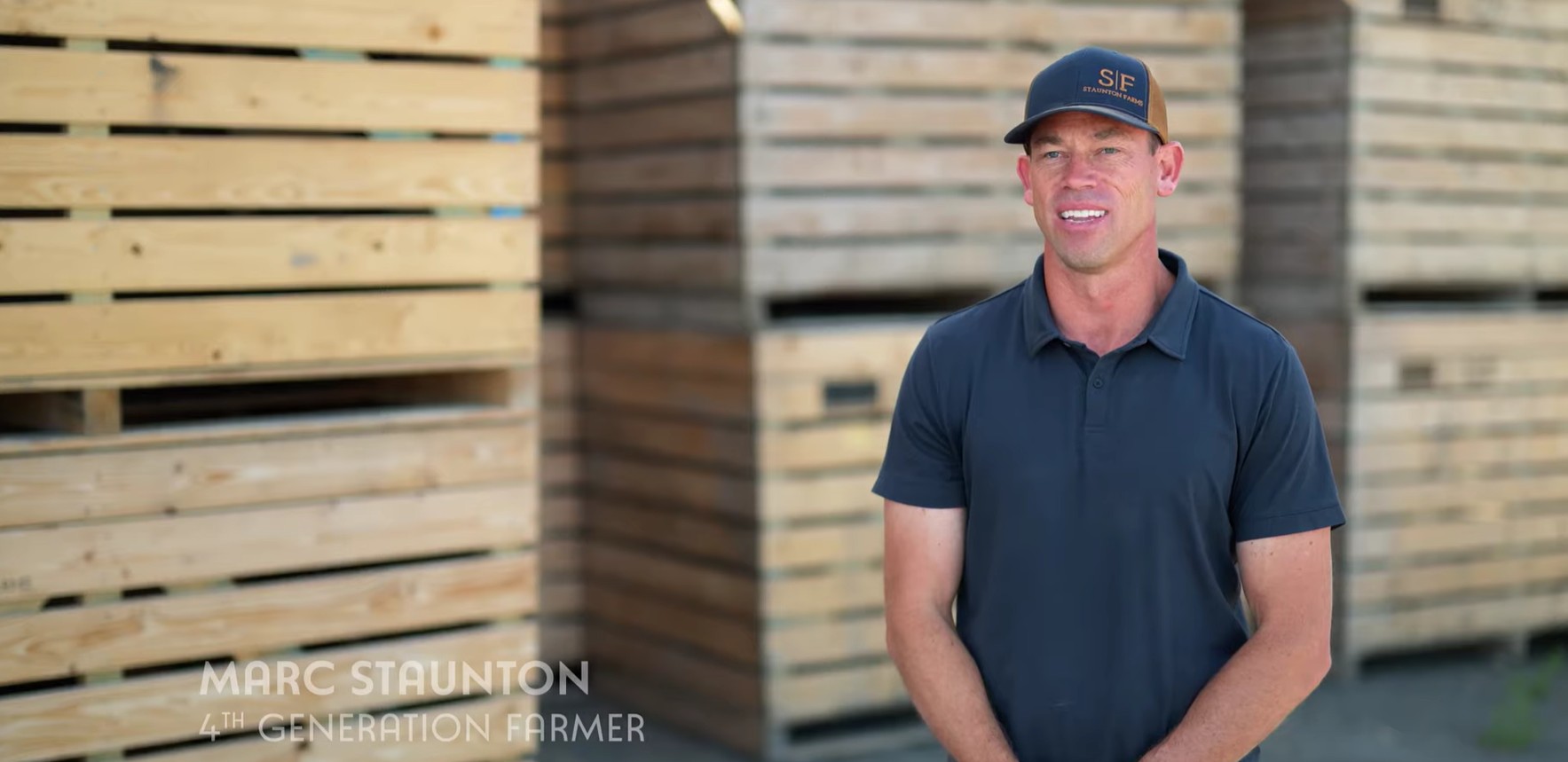
In the northernmost part of the state, potato farmer Marc Staunton takes an innovative approach to working with the natural environment. The results are undeniable – healthy potatoes that are full of flavor and store beautifully throughout the winter.
Healthy soils, high elevation and hearty potatoes
Over the last 120 years, many farmers in the Klamath Basin have developed a unique wetlands rotation system. For example, at Staunton Farms, each field is planted with alternating potato and onion crops over the course of four years. At the end of four years, that field is flooded and allowed to return to its natural state – wetlands – for two years. Marc elaborates, “What we’ve found is that a two-year full-season flood almost mimics returning back to that natural state of being a perpetual wetland. There’s a dramatic reduction in disease pressure, weed pressures go way down, soil nutrients go way up. It’s like virgin soil that’s never been farmed.”
After a two-year wetlands rotation, farmers are left with a nutrient-dense black topsoil, rich with organic matter and naturally PH-balanced. The combination of wetlands and crop rotation optimizes soil health, which helps to expedite time from planting to harvest by about 30 days.
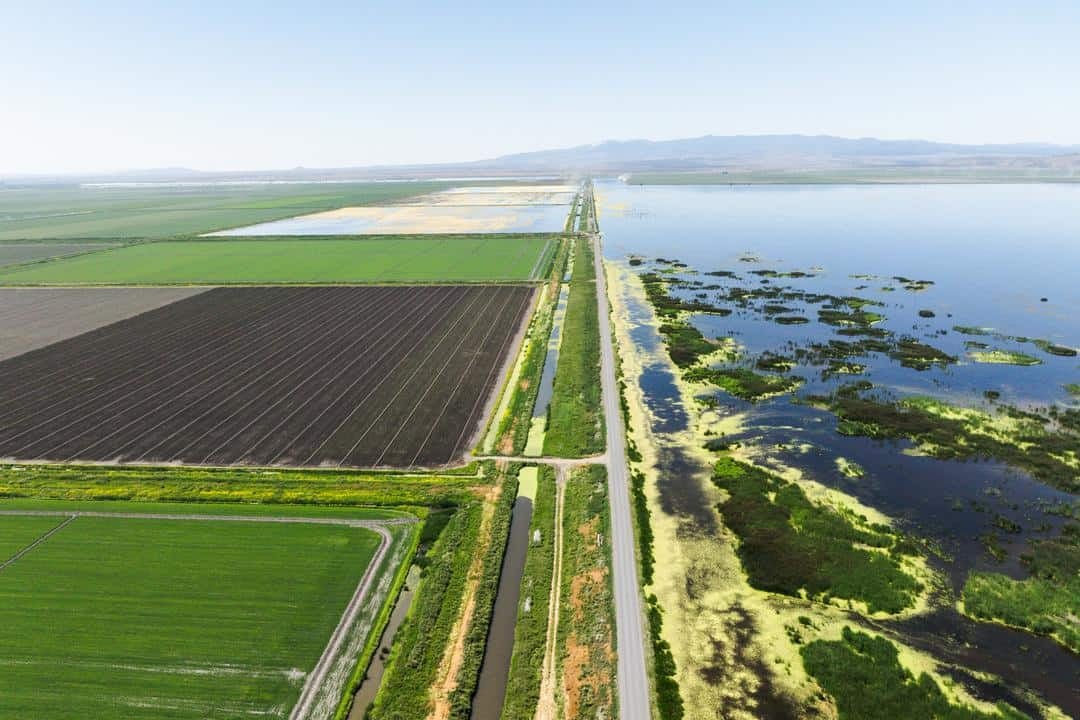
Elevation is another factor that makes the Klamath Basin a great place to grow potatoes. Higher elevation fields demand a shorter growing season, but the cooler nighttime temperatures yield a drastic reduction in disease pressure. Marc notes, “We’re really high elevation, at 4,200 feet. Our days get really hot in the summer, but our nights get really cool, which leads to really healthy potato plants.”
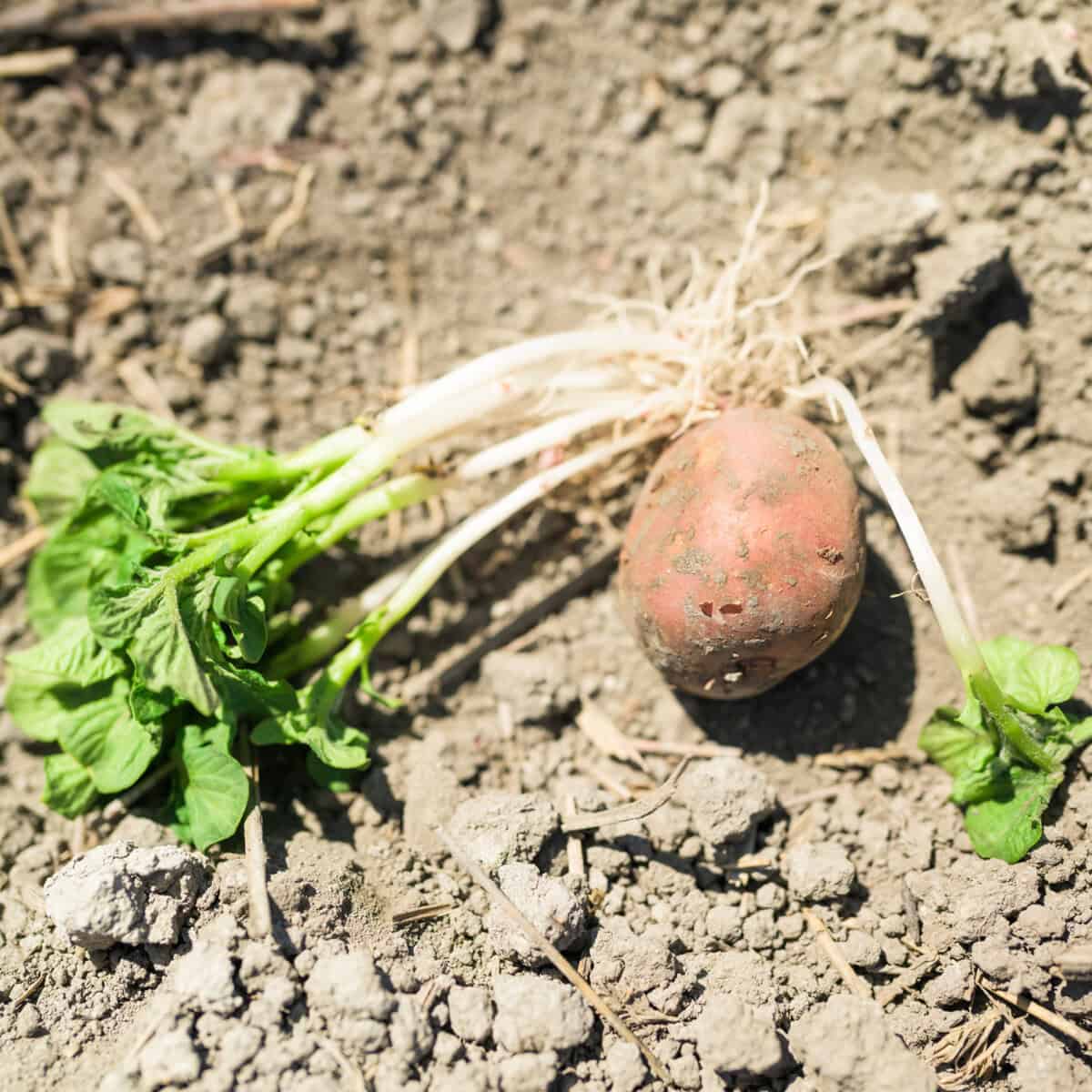
For thousands of years, the Tule Lake basin was a natural lake with no outlet – essentially a reservoir for snow melt. In the early 1900s, the Klamath Reclamation Project served to drain the lake, using the water for irrigation and making the land available for agriculture.
Filling the gap: why potato storage matters
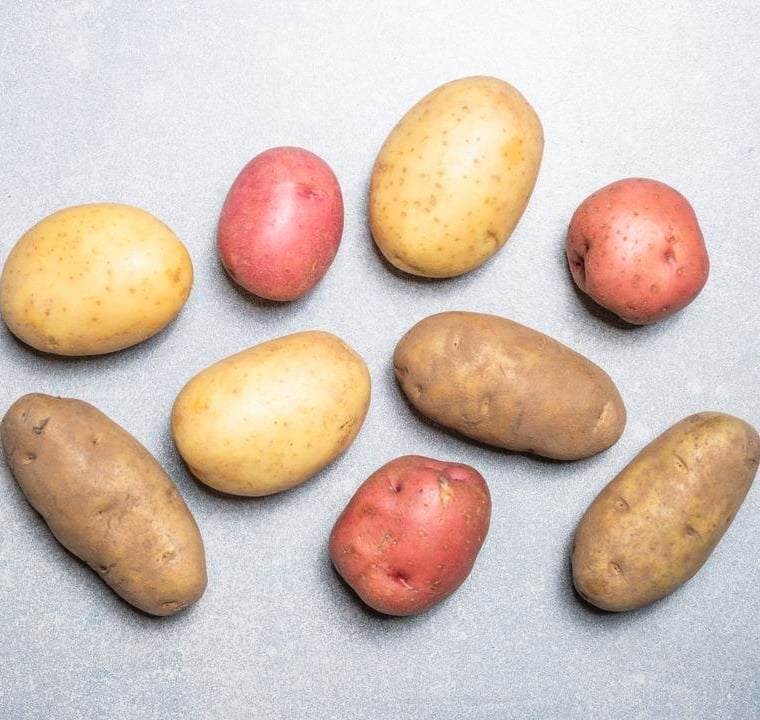
Ultimately, the fertile soil and optimal growing conditions yield a potato that stores well for an extended length of time. Marc adds, “We are able to grow and store potatoes, in a short growing season, that can service the California market through the winter until the spring crop comes off in the desert in California. That’s the same with the onions and the garlic that we grow here. We provide what we call the ‘end of season’ for California.”
Potatoes are harvested from late September through October in the Klamath Basin. However, harvest in the warmer desert regions won’t resume until around mid-March. That gap in production, from November through mid-March, also happens to be the time of year when potatoes are most popular. That’s why it’s incredibly important to have potatoes that store well. It ensures that California Grown potatoes are available throughout the holiday season and into Saint Patrick’s Day. Marc smiles and notes, “We fit that market perfectly because we have high quality storage potatoes coming at that time.”
Choose CA GROWN potatoes
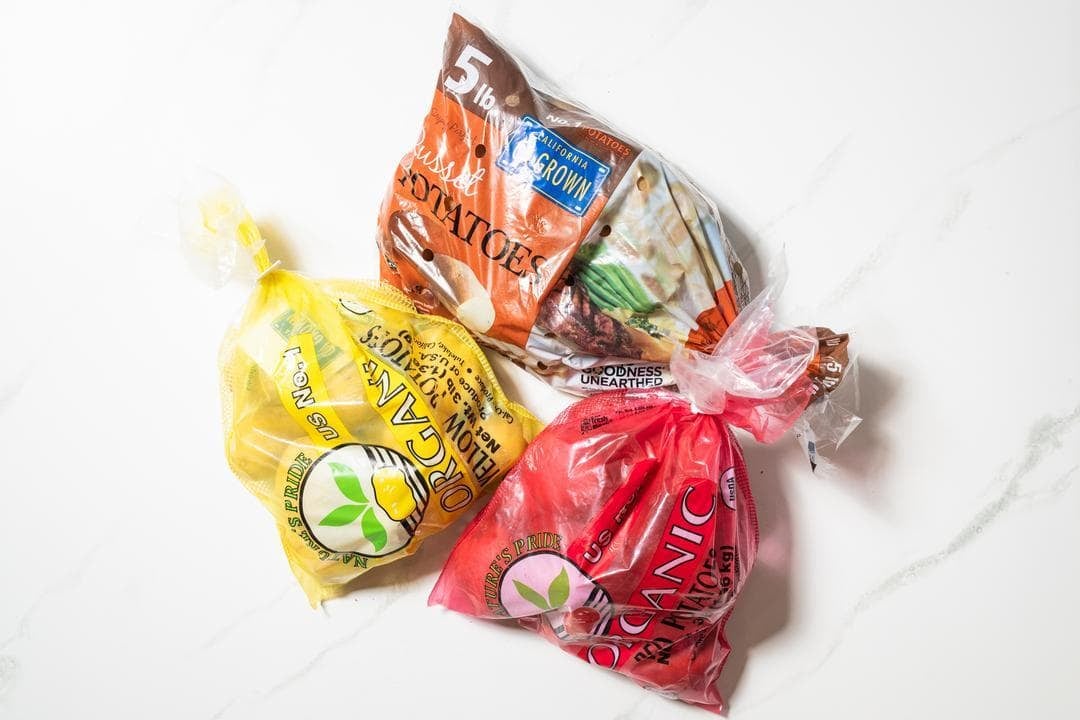
The potatoes grown at Staunton Farms are packaged by Cal-Ore Products and proudly labeled with the CA GROWN license plate.

Cal-Ore’s General Manager, Ryan Finney, proudly states, “When a customer sees the CA GROWN license plate, they will know that they are getting the highest quality potatoes. In my opinion, there’s no better potato than a potato grown in the state of California.”
Locals also boast that potatoes grown in this region have a fluffier texture and an earthier aroma. Marc recalls, “The Oregon potato commission started a taste test a few years back to figure out the terroir of different areas. The Klamath Basin consistently won all the taste tests for four years straight”. He pauses with a laugh and notes, ”after which they just stopped doing it. I do believe that our potatoes taste better – we have a more full-flavored potato.”
Cal-Ore Products potatoes are sold at Walmart stores nationwide. Next time you’re shopping for potatoes, look for the CA GROWN license plate!

Want to learn more about what happens after harvest? Check out our blog post on Cal-Ore Produce!
Looking for the most delicious ways to enjoy CA GROWN potatoes? Crispy Hasselback Potatoes Recipe with Herbs and Olives are hard to beat!

////////////////////////////// Walking Wetlands Innovator Testifies Before Congress – KWUA

Local Water Users and State Wildlife Managers testify to concerns over the negative consequences of the proposed BIDEH rule change.
WASHINGTON—Today, a fourth-generation farmer from the Klamath Basin testified before Congress. Marc Staunton’s family has lived and farmed land on the Klamath Project since 1928. A proposed rule by the U.S. Fish and Wildlife Service (Service) jeopardizes that family heritage. Among other things, the proposed rule would prohibit longstanding agricultural activities on refuge lands unless newly developed, vague standards are met.
“I strongly believe that done correctly, conservation and agriculture go hand in hand, and that belief is based on life experience,” said Staunton as he testified before the Subcommittee on Water, Wildlife, and Fisheries (Subcommittee).
In February, the Service proposed revising the existing Biological Integrity, Diversity, and Environmental Health (BIDEH) policy and implementing a new rule to guide the management of national wildlife refuges.
In the late 1990s and 2000s, Staunton Farms innovated a unique farming practice that promoted beneficial wildlife habitat and healthy farmlands through a successful program called Walking Wetlands. As historically carried out, leased public lands within the refuge are rotated between wetlands for fish & waterfowl and high-quality productive farmland. This process would become a cornerstone of the family farm’s business, sustaining a critical environment for wildlife and quality produce for human consumption.
Staunton continued his testimony, “The current draft of the BIDEH rule may have numerous unforeseen and negative consequences both today and in the future. Elimination of agriculture on refuge lands in our basin would severely impact local government, irrigation districts, communities, and farm balance sheets. Even though the Kuchel Act authorizes agriculture in the Klamath Refuge System the vague nature of the BIDEH language opens the door for legal and judicial interpretation.”
“Moreover, the proposed rule undermines the principles of local control and inhibits innovation by forcing top-down mandates that neglect regional nuances and challenges,” added Staunton. “By coming from a place of “no, unless” the rule impedes the ingenuity of creative minds and experience of agriculture as a purpose within the ecosystem.”
Rep. Cliff Bentz (OR-R), Chair of the Subcommittee on Water, Wildlife, and Fisheries, said, “Egregiously the rule creates a default position prohibiting use of management tools essential to protect the use of our refuge system. For example – management tools to include normal and historical agricultural practices and native predator control are prohibited unless a full NEPA process and/or other bureaucratic nightmares such as site-specific peer review are completed. The service under this rule is instantly prohibiting practices and means of working on and around refuges restricting the discretion of refuge managers and putting at risk the very purpose of individual refuges.”
Lease land producers have a great relationship with the staff of the Klamath Basin Refuge Complex and have been able to support and address wildlife needs and concerns year after year. Whether there is minimal water or an abundance, producers, and staff collaborate on maximum refuge benefits.
Rep. Bentz asked Staunton what his greatest concern is regarding the proposed ruling; Staunton answered, “My concern with this rule stems back to what you asked – purpose versus use. I think it’s really important…that although our relationship is strong with our local staff [now], we do not know what may happen [in] ten years. There may be a new refuge manager that comes in, and his directive is that we start with “no agriculture” because that is how the rule reads. My point would be if agriculture seems like a very important factor to the refuge system management, [then] the rule should reflect that.

This proposed rule change goes beyond farming in Southern Oregon and Northern California. It has the potential to affect communities throughout the United States. A representative of the National Organization of State Wildlife Agencies also testified against the proposed rule. Alaskan Natives who rely on refuge lands are also in jeopardy of consequences of decisions made thousands of miles away without any consultation with the people who live there.
“There has been talk about people who visit refuges, many Alaskans live on refuges,” stated Rep. Mary Sattler Peltola (AK-D). “We have lived there as long as we can remember, and then it became a refuge in the sixties. So, this is not a choice; this is not us going out of our way to visit, this is where we live.”
Rep. Peltola continued, “This proposed rule has a national focus…while it addresses predator control, it also addresses other issues that the service says have been impacted by climate change and anthropogenic activities. However, this rule has the same result in Alaska – predator control would fall to refuge managers rather than the state and the people who live closest to the resources and have always lived there.
Rep. Peltola asked how the Service could put forward a rule that appears to violate the Congressional Review Act.
“Agriculture has and will continue to play a critical role in the idea, adoption, and implementation of projects that meet statutory requirements, fulfill refuge purposes, and ensure biological integrity, diversity, and environmental health,” said Staunton.
Staunton concluded his testimony by stating, “The heavy hand of government and the looming threat of more litigation will not create a healthier, holistic ecosystem for our refuge. We are a community of local people embracing our role in the ecosystem, understanding the distinct challenges, and developing solutions as unique as our landscape.”
KWUA strongly opposes the Service’s proposed new rule, which would threaten historical agricultural practices on the Klamath Basin Refuge Complex and other national wildlife refuges. We call on the Service to review the proposal, do the right thing for the ecosystem, and, more importantly, protect the farming community and the $30 million crop value on the leased lands.
A replay of the hearing can be found at https://www.youtube.com/watch?v=-DDztLBEtWI.
Additional information on Marc Staunton’s written testimony and background can be found at https://www.kwua.org/kwua-in-dc-staunton-to-testify-in-congress/
Background on the proposed BIDEH rule
In a press release on February 1, 2024, the FWS stated, “[The proposal] will help provide a consistent, transparent, and science-based approach for evaluating both existing and new management practices at national wildlife refuges, in support of the mission of the National Wildlife Refuge System. These proposals will support conservation throughout the Refuge System and equip wildlife refuge managers with a framework to better tackle the dual threats of climate change and biodiversity loss.”
“This U.S. Fish and Wildlife Service has proposed new regulations that would establish a policy to prohibit farming and grazing on public lands in the national wildlife refuge system, unless new, extra-statutory criteria are satisfied,” Dan Keppen, Executive Director of Family Farm Alliance stated in March. “This proposal is an update of a policy issued during the last week of the Clinton Administration, and targets – and points to the elimination of – longstanding and widespread agricultural practices on those public lands.”
“Perhaps our biggest concern with the proposed regulation is that the notice of rulemaking recites reductions in wildlife populations and climate change but does not link the specific policy changes to these underlying concerns,” explains Keppen.
About Klamath Water Users Association (KWUA)
Since 1953, the KWUA is a 501(c)(4) non-profit corporation representing the interests of Klamath Project farmers and ranchers. KWUA members include rural and suburban irrigation districts, public agencies, and private individuals who operate on both sides of the California/Oregon border. These entities and individuals typically hold water delivery contracts with the U.S. Bureau of Reclamation. The Project is home to over 1,200 family farms and ranches; KWUA’s member districts deliver irrigation water to over 170,000 acres of some of the most incredibly productive farmland in the Western United States.
KWUA’s mission is to preserve and enhance the viability of irrigated agriculture for our membership in the Klamath Basin for the benefit of current and future generations.
KWUA is governed by an eleven-member Board of Directors representing Project districts. The Association employs an Executive Director and staff to execute policy decisions.
Press Release
Contact Information
Brian Gailey, Director of Marketing & Public Relations
541-883-6100 Office • 541-810-3133 Cell • brian@kwua.org
Cover photo caption: Fourth-generation farmer Marc Staunton testifies before the U.S. House of Representatives Natural Resources Committee Subcommittee on Water, Wildlife, and Fisheries regarding the proposed BIDEH rule changes by the US Fish and Wildlife Service. (April 10, 2024)
