Honoring the Fallen, Remembering Our Shared Strength
On September 11, 2001, nearly 3,000 innocent Americans were killed in terrorist attacks on New York City, Washington, D.C., and aboard Flight 93 in Pennsylvania. Among them were office workers beginning their day, travelers bound for family or work, and countless others who became victims of unimaginable violence.
We remember the firefighters, police officers, and paramedics who ran into burning towers to save others, and the service members who have since carried the burden of defending our nation. We remember the families who still grieve, the communities forever changed, and a country that—though wounded—rose together in resilience and unity.
2001 in the Basin
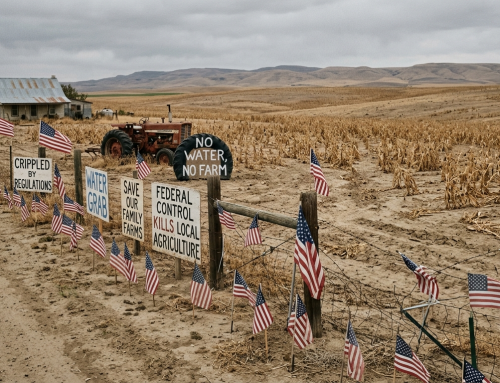
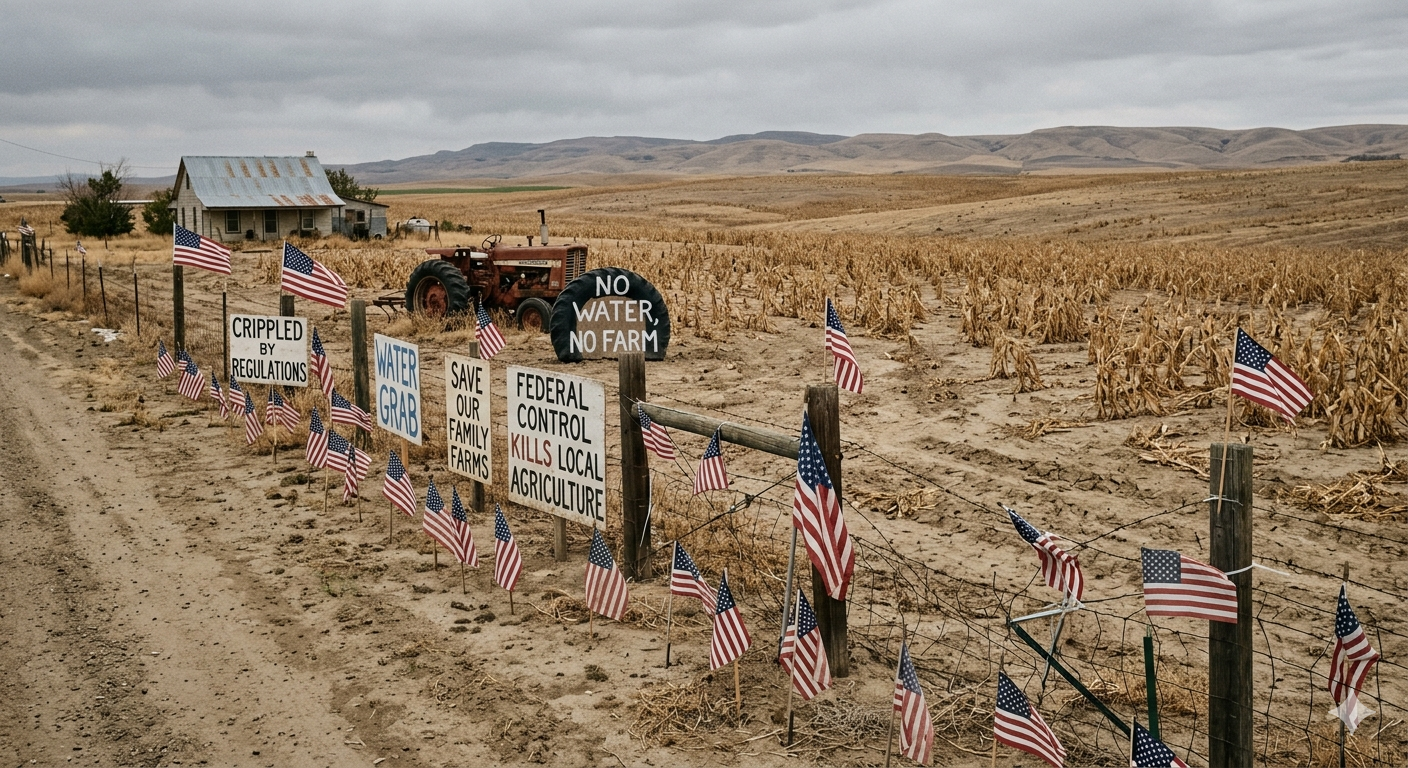
For the Klamath Basin, 2001 was already a year of extraordinary turmoil. Federal actions had closed irrigation water to thousands of family farms, pitting neighbor against neighbor and leaving fertile land to dry up. The “Bucket Brigade” drew national attention, as farmers lined the A Canal with buckets in hand, demanding fairness and survival.
It was later revealed that these federal decisions were not simply bureaucratic errors, but schemes of lawfare that deepened divisions and inflicted chaos on the Basin. Local families were left to bear the brunt of political experiments designed to test the limits of patience, livelihood, and community trust.
Then came September 11.
A Nation Attacked, A Community United
When news of the terrorist attacks reached the Basin, everything changed. Farmers set down their buckets. They returned to their fields. The nation had been attacked, and the focus shifted to something larger than the local fight over water.
Despite the turmoil here at home, the people of the Basin knew that America needed unity—not division. That spirit of patriotism and sacrifice helped carry our community through the years that followed.
2001 Timeline
In the Basin
- September 2000: Robert Anderson, with the Department of the Interior, under the Clinton Administration, put in place actions to deny water to Klamath irrigators when lake elevations were above average.
- 6 April 2001: With Upper Klamath Lake at nearly flood stage, Klamath Irrigators are informed that they will receive no water based upon the biased science paid for and inflicted on the Klamath farmers by the Department of the Interior.
- Spring–Summer 2001: Irrigation water shut off to family farms by federal order.
- May 7, 2001: The “Bucket Brigade” brings more than 15,000 people to the A Canal in Klamath Falls.
- Summer 2001: Crops wither, tensions rise, communities strain under unprecedented pressure.
- September 11: Farmers return to their dry farms and pray for the Nation.
In the Nation
- November 2000: George W. Bush wins the Presidential election
- 19 January 2001: The USFWS and NMFS issue conflicting Biological opinions on the Klamath on the final day of President Clinton’s term.
January 2001: George W. Bush is inaugurated and Gale Norton unknowingly inherits the chaos inflicted on Klamath farmers by Robert Anderson.
September 11, 2001: Terrorist attacks kill nearly 3,000 Americans in New York, Washington, and Pennsylvania. - September 12, 2001: Flags across the nation fly at half-staff; Americans gather in prayer and remembrance.
- September 2001 onward: U.S. service members deploy overseas in the War on Terror.
Reflections on 9/11 in 2025
Similarly, Robert Anderson’s DOI implemented its updated Biological Opinions and actions targeting Klamath farmers in late December 2024, less than a month before the inauguration of President Trump. History repeats itself.
As we remember 9/11, the Klamath Irrigation District honors the fallen, the first responders, and the service members who answered the call. We reflect on the resilience of our farmers, who—even while under attack from misguided federal policies—laid aside their buckets to stand with their country.
T
This rapid upward trend of political violence in recent years is unwelcome and un-American.
We also cannot ignore how painful it is when, instead of unity, some voices use moments of tragedy to reopen old wounds. The release of a recent podcast by the Klamath Tribes, revisiting this era in ways that divide rather than heal, stands in contrast to the spirit of national unity we saw after 9/11. At a time when terrorism had ripped at our nation’s fabric, our Basin should be striving to strengthen it.
“On 9/12, we were all simply Americans.”
– Klamath Irrigation District