In the Klamath Basin, there is an old adage that this was the one place you would never run short of water. For a century, the Klamath Project worked like a Swiss watch, turning the former marshes and wetlands into a lush patchwork of alfalfa, small grains, and cattle ranches. But for fourth-generation farmer Brent Cheyne, the “oops” of federal mismanagement has turned that certainty into a daily fight for survival.
Roots That Run Deep
The Cheyne story in the Basin began in 1909, when Brent’s grandfather settled on the home farm south of Klamath Falls. It was a time of frontier optimism, just three years after the first shovels hit the ground to expand the existing irrigation system that would become the community’s lifeblood. Today, Brent, 68, walks those same fields, but the landscape is changing.
However, the Cheyne connection to innovative, ahem, industry in the area didn’t stop with traditional farming. Over the generations, the family has maintained a sharp sense of humor. In 1913, Brent’s grandfather, Alex Cheyne, even managed to play a legendary satirical prank on The Sacramento Union. He provided a detailed quote about their “investment” in a new “Skunk Ranch” industry at Klamath Falls—an anecdote that apparently sailed right over the reporter’s head.
“Skunk Ranch New Industry Started at Klamath Falls… Owners Stock Farm With 5000 Odoriferous Animals—Is a Paying Industry.”
“…Three wagonloads of skins have been brought here for shipment during the past six months…”
“Jackrabbits, mudhens, and scrap meat furnish excellent food.”
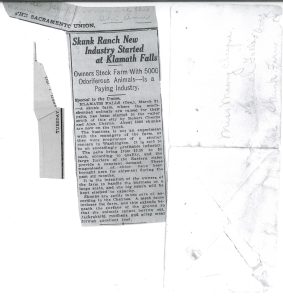
While they may not have cornered the market on skunk pelts, the Cheynes’ ability to see the lighter side of difficult times remains a defining trait.
Brent isn’t just farming for himself; he’s farming for the legacy. His son, Rodney, is the fifth generation to work this soil, and Brent’s four grandchildren—ranging from 6 to 12 years old—are already learning the ropes, raising their 4-H pigs and seeing firsthand what it means to be a steward of the land.
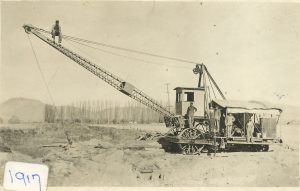
Photo: Cheyne and Bair families working under contract with the USRS on the Klamath Reclamation Project in 1917.
Resilience Beyond the Field
To understand Brent, you have to understand his perspective on pressure. In 2017, he faced a stage 4 cancer diagnosis. He fought it with the same quiet determination he brings to a drought year, and today, the cancer is in remission. When people ask about the stress of the water crisis or the weight of national leadership, Brent brushes it off with a rancher’s bluntness: “The cancer put pressure on my shoulders. These other issues are just a darn nuisance.”
That resilience led him to a new mission. Realizing he was mortal and wanting to ensure Rodney had the space to lead the family operation, Brent began stepping into the arena of agricultural policy.
From the A-Canal to the Halls of Congress
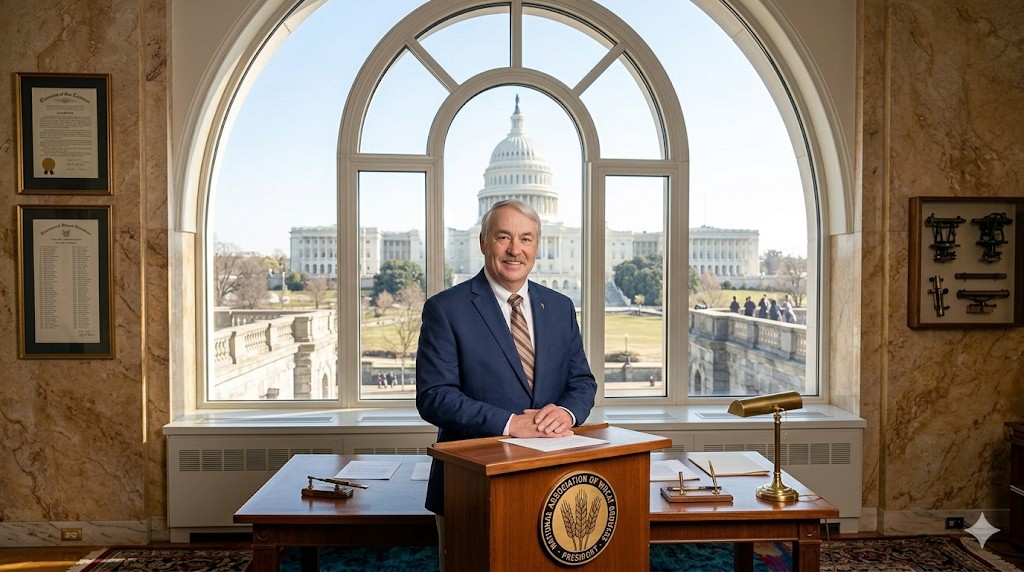
In March 2023, Brent took the helm as President of the National Association of Wheat Growers (NAWG). He didn’t go to Washington D.C. for the title; he went because the voice of the Klamath farmer needed to be heard where the laws are made.
His advocacy reached a peak during the 2023 Farm Bill negotiations. At a critical Senate Agriculture Subcommittee hearing, Brent stood as the voice of wheat growers across the country, emphasizing the “paramount importance” of a strong safety net.
Watch Brent Cheyne’s Testimony (starting at 1:37:00): Senate Agriculture Subcommittee Hearing on Farm Bill and Subsidy Policy
His message to the Senate was consistent with his fight at home:
-
Protect the Safety Net: Maintaining crop insurance is paramount. Without it, the volatility of weather and water policy will break the back of the American farmer.
-
American Independence: He has called for a “Manhattan Project” for domestic fertilizer production, arguing that American growers shouldn’t be held hostage by global supply chain disruptions.
-
The Flyway and the Farm: Brent is quick to point out the symbiotic relationship between agriculture and the environment. When the canals run dry, so do the Lower Klamath and Tule Lake wildlife refuges. “When ag is whole, the refuge is whole,” he says, pointing to the dry land that should be a sanctuary for millions of migratory birds.
Why We Fight
As Brent drives his pickup past fields that have been reduced to dust and weeds by three years of shutoffs, he remains pessimistic about the current federal trajectory but fiercely committed to the people. He describes the “weaponization” of the Endangered Species Act as a slap in the face to the families who have fed the nation for over a hundred years.
His call to action for his fellow growers is simple: Make your voice heard. Brent Cheyne is more than a wheat grower; he is a source of historical knowledge and a guardian of the American way of life. He knows that if farming is to survive in the Basin, it will be because the families who live here refuse to be silenced. As he continues to advocate as NAWG President, Brent reminds us all that agriculture is the solution—and the heartbeat of the Klamath Basin.
Mr. Cheyne begins his 2023 Testimony in front of the Senate Agriculture Subcommittee Hearing on the Farm Bill and Subsidy Policy at 1:37:00
//////////////////////////////////////////////////////////////////////////////////////////////
FIGHTING FOR FARMERS: Brent Cheyne advocates as NAWG president amid Klamath water crisis
Published 7:00 am Thursday, June 1, 2023
By GEORGE PLAVEN
Capital Press

Brent Cheyne
KLAMATH FALLS, Ore. — Brent Cheyne doesn’t mince words when talking about the decades-long struggle over water for farms in the Klamath Basin.
“Unless somebody gets their act together and starts making a few of the right moves, it’s over,” Cheyne said. “I am very pessimistic about this having a successful or happy outcome.”
Cheyne is referring to the federal government’s management — or mismanagement, as he sees it — of the Klamath Project, which provides water for about 230,000 acres of irrigated farmland straddling Southern Oregon and Northern California.
A fourth-generation family farmer, Cheyne, 68, produces small grains, alfalfa and Angus cattle south of Klamath Falls, Ore. His son, Rodney, also farms in the area, and his four grandchildren, ages 6 to 12, raise pigs for their 4-H Club.
But Cheyne worries about what the future holds. As more water is set aside for endangered fish in the Klamath River and Upper Klamath Lake, less is available for farms and wildlife refuges that bring in up to 1 million migratory birds each year along the Pacific Flyway.
Three consecutive years of extreme drought certainly haven’t helped matters, he added.
‘Never run short of water’
“The adage was, this was the one place you’ll never run short of water,” Cheyne said. “Oops. Something happened. We no longer seem to have plenty of water.”
That isn’t the only thing occupying Cheyne’s time. He took over as president of the National Association of Wheat Growers, or NAWG, in March. The organization lobbies in Washington, D.C., on behalf of wheat farmers across the country.
Cheyne testified before the House Agriculture Committee on April 26, urging lawmakers to maintain and enhance crop insurance in the 2023 Farm Bill.
Advocating on two fronts, Cheyne insists he doesn’t feel any added pressure. Having survived a stage 4 cancer diagnosis in 2017, he keeps things in perspective.
“The cancer put pressure on my shoulders,” he said. “These other two (issues) are just a darn nuisance.”
Water allocation improves
Mallards swam lazily in a nearby canal as Cheyne drove his pickup truck along a bumpy dirt road past fields of alfalfa where Rodney and his family live and farm.
Water is flowing in the Klamath Project this year thanks to a much-improved supply around the basin. Mountain snowpack has been 200% of normal, and Upper Klamath Lake was 92% full as of May 1, according to the Oregon Climate Service.
The U.S. Bureau of Reclamation, which controls the flow of water, has allocated 260,000 acre-feet from Upper Klamath Lake for irrigators. That still only satisfies about two-thirds of full demand, but a big improvement over the last two years.
Last year, Reclamation initially approved 50,000 acre-feet before increasing the allotment to 82,253 acre-feet later in the summer. In 2021, water was shut off entirely.
The effects, Cheyne said, have been devastating. As if to underscore his point, he drove past a 190-acre field that Rodney had previously farmed. After three years without water, it has been reduced to dry dirt and weeds.
“You’re starting to not even see the ground squirrels out there anymore,” Cheyne said. “They’re starving out and leaving.”
‘Weaponizing’ the ESA
Cheyne has lived and farmed here his whole life. His grandfather settled on the home farm south of Klamath Falls, Ore., in 1909, just three years after construction of the Klamath Project began in 1906.
For 100 years, the system worked “like a Swiss watch,” Cheyne said. Problems today stem from what he described as the “weaponization” of the Endangered Species Act.
Two species of sucker fish endemic to Upper Klamath Lake, known as C’waam and Koptu, were listed as endangered in 1988, and coho salmon in the lower Klamath River were listed as threatened under the ESA in 1997.
That has left Reclamation to negotiate agreements with two other federal agencies — the U.S. Fish and Wildlife Service and National Marine Fisheries Service — ensuring the Klamath Project does not jeopardize the survival of fish.
These deals, called Biological Opinions or BiOps, establish minimum water requirements in both the lake and river. Based on what’s left, Reclamation then calculates how much water will be available for farms and ranches.
Reclamation must meet certain water elevations in Upper Klamath Lake for C’waam and Koptu to access shoreline spawning and rearing habitat, according to the BiOps. Sucker populations are plummeting in Upper Klamath Lake, with 30,000 C’waam and fewer than 4,000 Koptu remaining, according to the Klamath Tribes.
Simultaneously, more water is also being sent down the Klamath River meant to protect coho from disease and lethally high temperatures.
Particularly during drought years, that has resulted in painful water cuts to the basin’s agriculture.
Refuges, canals run dry
It isn’t just the farmers who are hurting, Cheyne said. The Klamath Project also feeds water to both the Lower Klamath and Tule Lake national wildlife refuges, key stops along the Pacific Flyway for migratory birds and waterfowl.
Cheyne drove into the Lower Klamath refuge just across the state line in California, pointing out swaths of dry land that normally would be under several feet of water.
“It’s a symbiotic relationship. When ag is whole, the refuge is whole. When the refuge is whole, agriculture is whole,” he said. “This should be an insult and a slap in the face to every birder-slash-waterfowl enthusiast. This is the heart of the Pacific Flyway, and that’s what you’ve got.”
Meanwhile, Cheyne said irrigators are bearing the brunt of costs to fix leaking ditches and canals that have run dry.
Gene Souza, executive director of the Klamath Irrigation District, estimated the district’s operations and maintenance costs have tripled since 2021. He said KID has invested a quarter-million dollars alone in repairing just one 300-foot stretch of the main A Canal.
“It’s a struggle to keep water where it belongs,” he said.
Souza, who joined KID in 2019, said he has come to lean on Cheyne as a source of historical knowledge about the project.
“Brent is an advocate for agriculture, he’s an advocate for families, he’s an advocate for the American way of life,” Souza said. “We don’t always agree on everything, but we definitely have mutual respect for each other and I’ve come to appreciate his experiences and points of view.”
Joining NAWG
Five years ago, Cheyne was diagnosed with stage 4 prostate cancer. Though the cancer is now in remission, he said it led him to believe it was time to get out of farming on a full-time basis and make way for the next generation.
“I realize that I am mortal, and I’m not going to be here forever,” he said.
As he eases into retirement, Cheyne said he “didn’t want to be the father that started to slow down and retire right in Rodney’s way.”
To keep himself busy, Cheyne joined NAWG leadership in 2019 after finishing a one-year stint as president of the Oregon Wheat Growers League.
NAWG is the legislative branch of the U.S. wheat industry, Cheyne explained. Whereas the U.S. Wheat Associates focuses on marketing the crop, NAWG focuses on critical legislation coming out of Capitol Hill.
A month into his NAWG presidency, Cheyne has already testified before both House and Senate agriculture subcommittees about farmers’ priorities for the 2023 Farm Bill.
Chandler Goule, the organization’s CEO, praised Cheyne’s extensive background in farming and passion for agriculture.
His understanding of the challenges wheat growers face has paved the way for impactful policy reforms that benefit not only our members but also the entire agricultural sector,” Goule said. “I am confident that his continued efforts will drive positive change and shape a brighter future for farmers across the nation.”
Farm bill priorities
Cheyne said he is tempering his expectations for the upcoming farm bill. Given the recent standoff over the federal debt ceiling, he said it would be naive to think that cuts to farm programs wouldn’t be on the table.
However, in his testimony to lawmakers, Cheyne has been urging the government to protect crop insurance and maintain the farm safety net.
“I think our crop insurance is of paramount importance. We cannot let it go away,” he said.
Cheyne said he would also like to see more investment in the USDA Market Access Program and Foreign Market Development Program to ensure American agriculture can stay competitive and relevant on the world stage.
“We’ve got to keep pace with our competitors, and we’re slowly starting to get left behind,” he said.
Finally, Cheyne said he would like to see a small-scale “Manhattan-type Project” building infrastructure to produce fertilizer domestically. Russia’s invasion of Ukraine has led to a global shortage of fertilizer, reducing supply and driving up the price.
“We have the technology to do it in an environmentally friendly way, to get these fertilizers manufactured here in America,” Cheyne said. “We shouldn’t be allowing ourselves to be wholly reliant on imported fertilizer.”
‘Make your voice heard’
Back at home, Cheyne said his wheat crop this year is benefiting from more water, though he has observed areas of winter damage in his fields.
Reclamation insists the Klamath Project is on track to meet its ESA obligations in 2023. A federal judge in San Francisco recently indicated he would not grant an injunction limiting water to the Klamath Project, which the Yurok Tribe had sought after minimum streamflows for salmon in the Klamath River were reduced in February.
Cheyne doesn’t hide his frustrations over the ongoing legal battles. The way the project is being managed now, he said farms are going dry while fish populations continue to suffer.
“The fun of living here is a thing of the past — for me, anyway,” he said.
Despite the challenges, Cheyne said farmers must find ways to speak up and be their own advocate. If farming is to survive in the basin, growers need to communicate why they are essential, and how they feed the world.
“Make your voice heard,” he said. “We need to be working to educate everybody on just what agriculture is, who we are, what we do, why we are needed and necessary and why we are part of the solution and not the problem.”
