
Klamath Irrigation District · Field Notice
Updated July 15, 2026
Grasshopper & Mormon Cricket Reporting
2026 Season · Klamath, Modoc & Siskiyou Counties
What's new: KID's reporting portal is open again as of July 15, 2026. See Why report to KID for what changed.
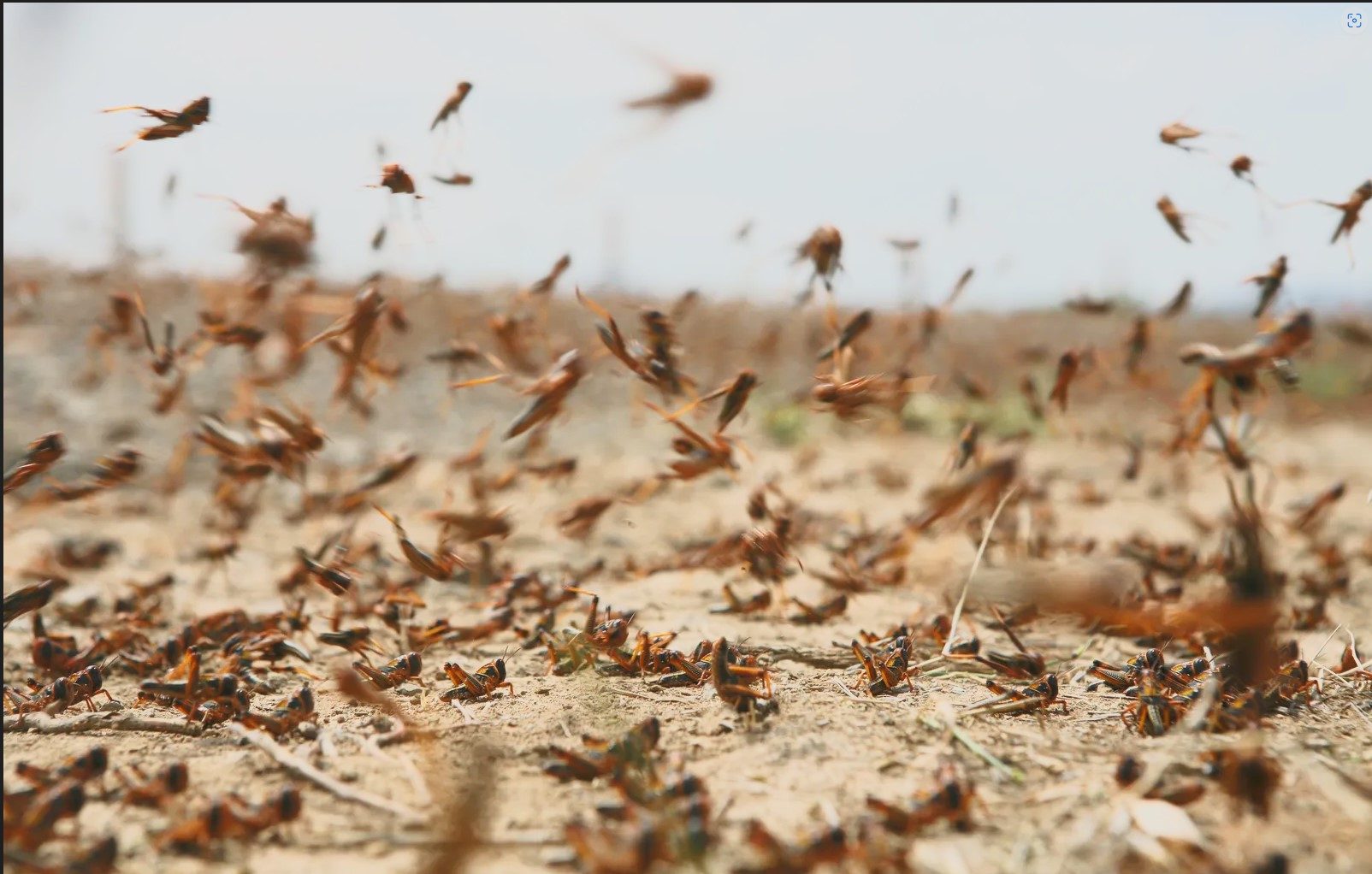
Grasshoppers and Mormon crickets are active across the Basin this year. If you see them on your ground, tell us where. Your reports help the District and partner agencies map where the insects are building and respond before they reach standing crops.
Report a sighting →KID's reporting portal reopened July 15, 2026. Grasshoppers have been observed hatching in large numbers at the Lower Klamath National Wildlife Refuge, and producers along the state line are already treating. Early reports make the difference.
01What we're seeing
- Grasshoppers have been spotted hatching and pouring out of the ground at the Lower Klamath National Wildlife Refuge in Siskiyou County.
- Producers along the Oregon–California state line have treated for grasshopper infestations several times this spring.
- KID patrons are reporting every stage — from newly hatched nymphs to full-grown adults — in the Van Brimmer Ditch Company area and the dry ground along the state line.
02The damage they do
During the 2023 grasshopper invasion, one patron reported losing 80 acres of grain in a single day.
Patron report · 2023 outbreak
At outbreak numbers, grasshoppers and Mormon crickets feed on leaves, stems, and seed heads, and they can clear a field in a matter of days. They usually start at the edges and work inward, and once one field is gone they move on to the next. Grain, alfalfa, and pasture are all at risk — and even where they don't take out a stand completely, they cut both yield and quality. 2023 was the last major outbreak in the Basin, and with this year's dry, fallowed ground and scarce forage, the conditions point the same direction.
03Why your report matters
Grasshopper outbreaks tend to follow drought years. Low rainfall and warm spring weather help eggs hatch and let young nymphs survive, so populations build fast — and as forage dries up, hungry grasshoppers move into pastures and crops. With so much dry, fallowed ground this season, conditions across the Basin point toward another hard year for crop damage.
The more we know about where the insects are and how thick they're getting, the better the District and partner agencies can target a response. A two-minute report from your field is the most useful information there is.
04Why report to KID
The Oregon Department of Agriculture has opened its reporting portal for the season, but no weekly reports or updates are being published from it. That means the information growers submit isn't coming back to the people who need it.
In June, the Klamath County Grasshopper Grant Committee met to discuss the remaining funds and recommended that Klamath County develop its own database and reporting system, separate from ODA. The purpose is threefold: to gain direct access to the data, to get updates back to growers and to those working to mitigate the problem, and to support ongoing multi-year efforts rather than starting over each season.
Klamath Irrigation District reopened its reporting portal effective July 15, 2026. Please send your reports here. We will work with ODA to cross-pollinate our data with theirs, so reporting to KID does not take your observations out of the state's picture — it adds a local record we can actually use and share back.
05Where we're collecting reports
06How to report
Fill out the short form below. It works on a phone in the field or on a computer, and it takes only a couple of minutes.
Form not loading on your device? Open the report form in a new tab →
07What to include in your report
- Where you saw them — nearest road, field, or canal.
- Roughly how many — a few, or thick across the ground.
- Life stage — tiny nymphs, mid-size, or full-grown adults.
- What they're on — bare ground, pasture, or a standing crop.
- Whether you've treated, and what you used.
- A photo, if you can take one.
08Resources
- Oregon Dept. of Agriculture — Grasshoppers & Mormon Crickets State program background, control guidance, and the state's own reporting portal.
- Control & Suppression flyer (PDF) Practical options for managing grasshoppers and Mormon crickets.
- Grasshopper & Mormon Cricket FAQs (PDF) Common questions about outbreaks and what to expect.
- USDA — Grasshopper biology, identification & management How to tell species apart and understand their life cycle.
Klamath Irrigation District · klamathid.org
Questions about reporting? Contact the District office.