The internet has a favorite word lately: “Colonizer.”
It is a label frequently tossed around on social media by activists and disconnected policymakers to describe the agricultural families of the Klamath Basin. It paints a picture of wealthy outsiders exploiting the land, taking resources, and giving nothing back.
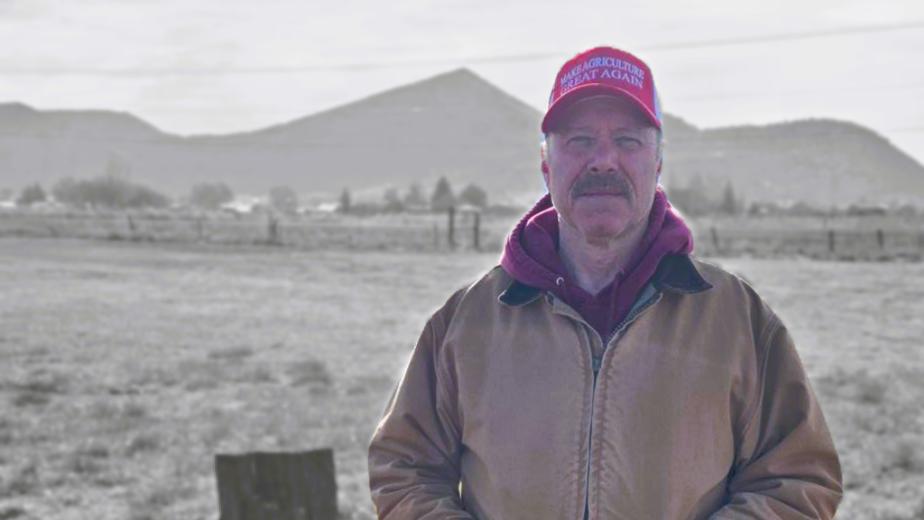
But that label disintegrates the moment you look at the calloused hands of Ken Schell—and the empty pastures where his cattle used to be.
Ken didn’t come here to conquer; he came here to survive. In 1962, his family left a dry, struggling ranch in California to find a future. Ken was just two years old when his grandfather looked out over Upper Klamath Lake and said, “Look at all this water—we will never run out.”
To them, the Klamath Basin wasn’t a resource to be plundered; it was a promise kept.
Sweat Equity and Deep Roots The narrative often suggests that farmers sit back while the water flows. Ken Schell’s life proves otherwise. Operating as Schell Ranch, the family farmed 300 acres of hay and raised cattle, growing their herd from 60 to 200 mother cows.
But farming in the Klamath Basin has never been a passive existence. To keep the ranch afloat and the family fed, Ken became a fixture in the local workforce. He didn’t just work his own land; he helped build the community’s infrastructure.
-
He shipped cattle for Woody Gueck.
-
He delivered pellets for Aubry Campbell.
-
He ran the floor as a foreman at Jespersen’s Potato Packing Shed.
-
He loaded trucks for Witco Chemical.
-
He ran a “slash buster” for John Brown.
These aren’t the actions of an outsider. These are the actions of a neighbor—someone who builds the local economy with his own sweat equity.
The Cost of a Man-Made Drought Ken worked those extra jobs for decades with a specific goal in mind: a modest, well-earned retirement. But today, because of federal policy, that retirement is unattainable.
The reality of the Endangered Species Act (ESA) policy in the basin isn’t just lines on a map; it is the forced liquidation of a family’s legacy. After the 2021 water shut-off, Ken was backed into a corner. With water uncertainty becoming the norm, he could no longer plan from year to year. He couldn’t afford to feed his cows his summer hay as pasture, only to turn around and buy expensive hay in the winter because his fields were eaten down.
In his final year of raising cattle, Ken had to shuttle his herd to three different ranches just to find proper forage.
“I didn’t want to sell my cows,” Ken admits, “but I couldn’t see how we would survive if I didn’t.”
The poor federal ESA policy forced his hand. He sold every single beef cow well before prices rose. The financial stability he had worked toward for sixty years evaporated, replaced by deep frustration and the gnawing anxiety of a future that looks nothing like the one he was promised. The mental toll of watching your life’s work dismantled by bureaucracy is a burden no farmer should have to carry.
Dividing Neighbors What makes this loss even harder to swallow is how the government has achieved it. Ken believes the federal government has weaponized the ESA to create a man-made drought, using it as a wedge to drive the community apart.
“In my opinion, the federal government has used the Tribes as a tool to create division,” Ken says.
For Ken, the indigenous families of the Basin and the farming families are not natural enemies; they are neighbors who have lived side-by-side for generations. But Washington D.C. has created a narrative of conflict to mask their own agenda: securing water for California.
“The government has split us,” Ken says. “You have the farmers that want to farm, and you have the farmers farming the government.”
Reclaiming the Truth Since 2001, the loss to the Basin has been detrimental. When online narratives erase the history of families like the Schells, they erase the human reality of the crisis.
Ken Schell is a patron of the Klamath and Pine Grove Irrigation Districts. He is a husband, a father, and a worker who has spent over 60 years in the dirt of this valley. The government’s management of the water is, in Ken’s words, “criminal.” But despite the anxiety and the hardship, he remains.
It is time to drop the labels that divide us and focus on the truth: policies from D.C. are destroying the lives of the people who actually live here.