
Western Livestock Journal, August 16, 2024
by Anna Miller
https://www.wlj.net/top_headlines/the-viewpoint-with-ty-kliewer/article_0cc72536-5bde-11ef-b6ca-6b1740e2ac38.html

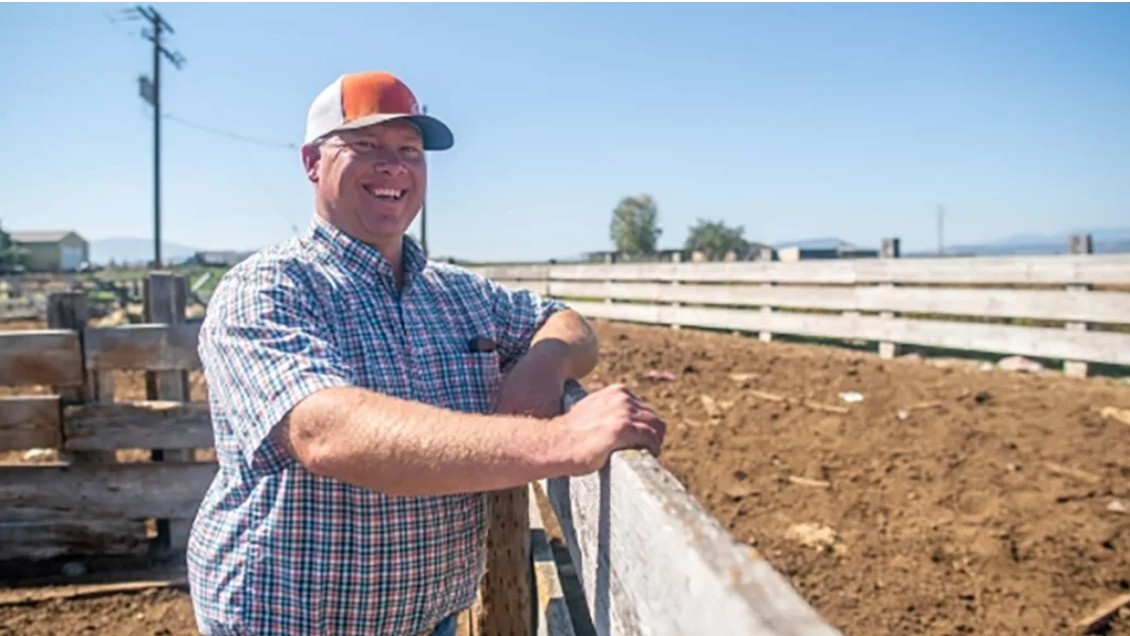
In the heart of the Klamath River Basin, Ty Kliewer and his family stand as resilient agriculturalists in a landscape facing ongoing water disputes. Ty and his wife of 21 years, Brooke, and their two children, Anna and Cade, farm and ranch in the tight-knit community of Klamath Falls, OR.
Ty offers a well-rounded perspective on the region’s agriculture sector, drawing on a diverse background that spans from farming and ranching to brewing beer. His experience also includes roles as a policy field representative, high school ag teacher and dedicated industry leader sitting on several ag boards.
Despite the perpetual battle to secure enough water to maintain farming and cattle operations, Ty can’t imagine living anywhere else.
“The community here, and the people who live here, are absolutely incredible, and their resiliency is amazing,” Ty told WLJ. “There’s no other group of people on earth that I’d rather be around.”
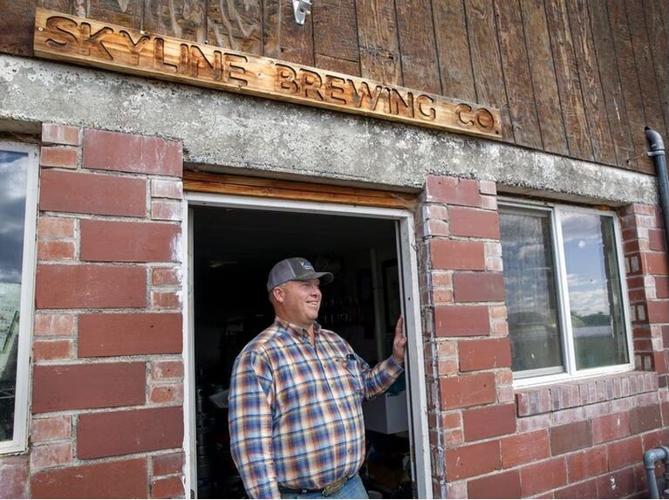
Ty is actively engaged in the community, farming and ranching full time while also serving on the Oregon State Board of Agriculture and the Klamath Water Users Association board of directors, in addition to avidly supporting the 4-H and FFA programs. He also started Skyline Brewing Company several years ago, brewing up kegs in a 100-year-old milking parlor on the family’s farm.
With his wide range of involvement and homegrown roots, Ty has been on the forefront of the Klamath Basin water rights conflict for more than two decades.
The ongoing conflict
The Klamath River Basin has been making national headlines over the past couple of years due to the controversial decision to remove the four hydroelectric dams on the Klamath River—the largest dam removal project in U.S. history. Proponents argued the removal would help the salmon populations, while opponents contended removing the dams would cause property damage and loss, environmental harm and increased utility rates.
The basin has a long history of water rights disputes. Historically, the Klamath Irrigation Project aimed to manage water diversions to support agriculture while also meeting the needs of the local Tribal groups and environmental concerns.
However, in 2001, the project was shut down to protect fish under the Endangered Species Act, leading to the Klamath Basin Restoration Agreement and Klamath Hydroelectric Settlement Agreement. These agreements were “extremely politically divisive” for the community, according to Ty. The ultimate goal was to remove the dams, return land to the Klamath Tribes and guarantee an annual water allocation to the project.
“The problem was that a lot of pieces had to fall in place politically and otherwise in order for the whole package to go forward,” Ty noted. “When that didn’t happen, ag got left behind.”
Nonetheless, operations remained mostly functional until 2020, Ty said. That year, only 140,000 acre-feet of water was allocated to the project, about 40% of the 350,000 acre-feet of water needed to supply Klamath Project irrigators. Local community members rallied around the “Shut Down & Fed Up” movement, protesting the drastically reduced allocation.
“We had 27 miles of traffic on the road at one time,” Ty said. “Our goal was to do something viewed that would make national news.”
But then came 2021, and the project was dealt a crushing blow—an allocation of zero water. “I remember 2020 kind of happily in hindsight, because we’d gotten a lot more done than we probably should have with the water that we had that year,” Ty said. “2021 and 2022 were two of the worst years of my life.”
Water allocations from 2020-22 ranged from zero to 155,000 acre-feet.
“When you watch everything that you’ve done your whole life—everything that you hold dear and everything that means anything to you—shrivel up and die, that’s one of the most excruciating things that you can ever feel,” Ty said.
Water allocations have increased slightly in the past couple of years, with 2024 receiving an allocation of 230,000 acre-feet—still about 35% short of the estimated need.
Dam removals coming to a close
As the basin continues to deal with decreased water allocations, another significant challenge in the region is the removal of dams on the Klamath River.
The Klamath Hydroelectric Settlement Agreement was amended in April 2016 to decommission the Klamath River’s four dams by the end of 2024. Dam removal began in 2023 and is set to be completed by the end of September, returning the river to a free-flowing waterway.
Ty refers to the removal process as “the grandest science experiment that has ever been done,” noting the implications of the aftermath. After removing the dams, millions of tons of sediment were released down the river, killing salmon and causing other “environmental atrocities,” Ty said.
Deer and other wildlife that relied on the reservoir water behind the dams waded into the quicksand that accumulated on the banks, finding themselves stuck and dying there. Ty also noted the sediment flows likely killed at least two years of salmon classes, in addition to covering up the gravel the fish need for their nests.
“While our local farming community will once again carry the burden of these devastating federal directives, the imperiled fish populations show no positive response to these actions,” Ty wrote in a 2020 letter to then-Secretary of the Interior David Bernhardt, a statement that still holds true today.
In a separate, July 2024 letter to the editor of local media outlets, Ty penned, “We must discuss success, not winning or ensuring the other guy loses. This can all be prevented if the federal government is honest about the conditions in the basin and takes decisive action to stop this train from derailing.”
In seeking a long-term water solution for the basin that benefits both ag interests and Tribal and environmental concerns, Ty remains hopeful.
“Everything has gotten so hyper-polarized the last few years,” he said. “I want to think the majority of people just want real answers that are going to work, and there’s hopefully going to be a big consensus.”
He continued that the use of science requires humility to understand when something isn’t working, noting that “we just keep beating our heads into the wall with the same-old 20-plus years in a row here.
“The key to life is balance and we’re currently in a situation where the salmon in the river are not doing well. The wildlife on the refuges are not doing well. The ag community here for darn sure is not doing well,” Ty finished. “We’re just in a world where everything’s broken and we have to balance it again and hopefully unbreak it.”
Through all the turmoil, Ty’s commitment to his community and the land remain steadfast.
Western Livestock Journal, August 16, 2024
by Anna Miller
https://www.wlj.net/top_headlines/the-viewpoint-with-ty-kliewer/article_0cc72536-5bde-11ef-b6ca-6b1740e2ac38.html
Kliewer appointed to State Board of Ag
Oregon Governor Tina Kotek has appointed KWUA Board Member and third-generation farmer, Ty Kliewer to the Oregon State Board of Agriculture.
On June 12, the Oregon Department of Agriculture (ODA) announced that Klamath Water Users Association (KWUA) Board Member and third-generation Klamath Project farmer, Ty Kliewer has been appointed to the Oregon State Board of Agriculture by Governor Tina Kotek.
Kliewer is one of two people appointed by the Governor to fill vacancies on the board. Ellie Norris a second-generation blueberry farmer from the Umpqua Valley was also appointed.
The appointments were effective June 1, 2024. The newly appointed members fill the remaining partial terms left vacant when Shantae Johnson and Randi Svaty resigned from the board. Kliewer and Norris, with their extensive backgrounds and qualifications, will each serve on the Board until October 31, 2026, and be eligible to serve at least one additional 4-year term.
Kliewer is a third-generation Klamath Project farmer, rancher, part-time brewer, and KWUA Board Member. He graduated from Henley High School and Oregon State University, earning a degree in animal science.
In addition to farming forage crops and raising Angus, Gelbvieh, and crossbred cattle, Kliewer is the owner and founder of Skyline Brewing Company. He is currently in the process of opening a taproom to showcase local agricultural products. As an active community member, Kliewer volunteers his time with the Klamath County 4-H and the local chapter of Future Farmers of America (FFA).
“Agriculture is my greatest passion in life, and cultivating the young people who will carry forward and elaborate on the proud tradition we have inherited is the great calling of my life,” said Kliewer. “I strive to be very involved in my community and advocate for what will bring forth a brighter future.”
Norris is a second-generation blueberry farmer with Norris Farms located in the Umpqua Valley in Southern Oregon. She graduated from Oregon State University with degrees in biology and chemistry. After graduation, she worked in marine biology, then made the jump to outdoor apparel companies REI and Arc’teryx, where she specialized in opening new stores and developing training programs.
In 2014, Ellie came home to the family blueberry farm and began the transition to owner/operator. Since returning, she has been active in the Oregon Blueberry Commission, the US Highbush Council, and the North American Blueberry Council.
“Farming and agriculture are my passions, and I have devoted my life to preserving them,” said Norris. “I am a fierce advocate for family farms, advancing technologies to improve farming practices and improving the quality of life of the American farmer. I feel I could continue to have a unique voice and perspective for the ODA Board with my experiences as a Southern Oregon farmer.”
The Governor is responsible for appointing all members of the Board of Agriculture. The Oregon State Board of Agriculture, a 12-member board, is vital and influential in advising ODA on policy issues, developing recommendations on key agricultural issues, and providing strong advocacy for the state’s agriculture industry. The Board was established by Oregon Revised Statute 561.372.
“I want to express my heartfelt thanks to all the applicants for their willingness to serve Oregon,” said Lisa Charpilloz Hanson, Director of the Oregon Department of Agriculture. “Service is what life is all about, and I’m honored to welcome Tyrel and Ellie, who share this philosophy in life and their work.”
____________________________________________________________________________________________________
Article by Brian Gailey, KWUA Director of Communications for Basin Ag News, June 2024.
Kliewer appointed to State Board of Ag – KWUA
What’s Up Klamath Falls Interview.
What’s Up Klamath Falls – Spotlight on Skyline Brewing!